
Winning Over the Type B Personality

You are fully prepared for your meeting with a potential client. Once there, at the last minute he is not available, and has sent his personal assistant to replace him. Truth be told, you are a bit relieved, because the big boss is a really difficult person. His assistant, on the other hand, proves to be a very agreeable, understanding, and downright sympathetic person. You are sure you scored points as you were able to fully dwell on the advantages of your products and services. In the end, you leave with the promise of a favourable answer in the next two days…

Two days have gone by, then three, then seven; still no word. What happened? And what to do? Diligently, you follow up: you call or stop by to see your contact. She promises to speak with her boss very soon about your presentation – in other words, it has not yet been done! Conscientiously, you offer another date for the follow-up, “you will have an answer in one week, for sure”, the person replies. Another week goes by, you follow-up, but this time your contact cannot be reached. You try again the next day, and the next week, and still no answer. The cat and mouse game has begun, and you risk going through – and this is not uncommon – several months of follow-ups with no result. Stalemate.

A while ago, we published an article on Type A personalities (Mission Possible: Convincing Type A personalities, August 2015. See our blog at consultationettraduction.com). These people tend to be irritable, and impatient; they are very energetic, and hate to waste time. They are the embodiment of action and urgency. With them, emotion, uncertainty, reflection, are words to be avoided as much as possible. To convince them, the proper language will go a long way, the conversation must be results-oriented, and the following words used profusely: conduct, take action, commit, aim, mobilize, reinforce, target, fight, intensify.

What to do then when faced with a person who seems more accommodating, and even hesitant? These people are qualified as Type B personalities.

They are generally calm, patient, lively, and friendly. They tend to be in health care or in more creative fields. They are less – much less – stressed, and less competitive. However, since they are appreciated as a person, they do obtain promotions, and find themselves in positions of leadership and decision making.

Doing business with a Type B can prove challenging for representatives because these people are in no hurry to make a decision, nor to sign an agreement! How, then, does one get around this challenge? Following are five suggestions that may help you become more successful with them:

  1. Words with weight. With Type As, words such as like, feel, fun, accommodate, discuss, talk, debate, are to be avoided at all cost, but they are perfectly OK with Type B personalities. They must be handled gently… not forcefully!
  2. The right person. You must make sure that the person you are speaking with IS the one that will be making the decision in the end, rather than a person delegated by a Type A to “filter” visitors and presentations to avoid any waste of time… wich happens more often than we like to think!
  3. Team work. As Type Bs like to be part of a team, it would be well advised to bring them to include another employee in the discussion, to help with the decision making – the boss, or someone who is an effective influencer with the boss or the decision maker.
  4.  Follow-up. That being said, how can other people be included in the discussion? First of all, if your goal is to FAIL, then by all means do continue your discussions and follow ups with this contact! If not, make sure that you are not alone with this person during the follow-up meeting: it WILL be a waste of time! When confirming the date for the next appointment, ask your contact who will be present. This may encourage him or her to organize a more formal meeting. You can also suggest, gently, to invite the boss – your contact may even greet this idea with open arms, as the responsibility of making a decision will then be passed on to another!
  5. Know when to move on. If all else fails, there is the very likely possibility that your Type B person is simply reluctant to admit that he prefers dealing with another person, or another supplier. You must have the courage to see things as they are and to move on, spending your precious time on more promising prospects. However, if you play your cards well, using the right words and insisting, gently, on team work, you will be giving yourself a better chance of winning the deal.


Continue reading “Winning Over the Type B Personality”

Gagner à sa cause une personnalité de type B

Vous avez soigneusement préparé votre rendez-vous avec un client potentiel. Mais ce dernier, accaparé par un autre dossier, a délégué sa personne de confiance pour la rencontre. Vous êtes franchement soulagé, le grand patron étant très difficile à approcher. De plus, la personne mandatée était d’une grande gentillesse, pleine de compréhension et de bons mots. Vous êtes assuré d’avoir compté des points ayant eu la chance de faire étalage de tous les bienfaits de vos produits et services. Vous attendez donc une réponse favorable dans les deux jours…

Deux jours passent, puis trois, puis sept : toujours rien. Qu’est-il arrivé… et que faire ? Diligemment, vous faites votre suivi, vous appelez ou passez revoir votre personne ressource. Elle vous promet de parler à son patron très bientôt de votre présentation (donc, ce n’est pas encore fait !). Consciencieusement, vous proposez une date pour un nouveau suivi : « dans une semaine, sans faute », vous assure-t-on. Une autre semaine s’écoule, vous faites votre suivi, mais votre personne ressource n’est pas joignable. Autre tentative le lendemain, ou la semaine suivante, toujours pas de réponse. Le jeu du chat et de la souris est bien amorcé et vous ferez – ça s’est vu – plusieurs mois de suivis sans résultat. C’est l’impasse.

Nous avons publié, il y a quelque temps, une capsule sur les personnalités de type A (Mission possible : convaincre une personnalité de type A, août 2015, à consulter sur notre blogue à : consultationettraduction.com). Ces dernières sont de tempérament irascible, impatients, détestant perdre leur temps et vivant dans l’urgence et l’action. Avec elles, il faut éviter l’étalage d’émotions, les incertitudes, la réflexion. Pour les convaincre, il faut parler de résultats en utilisant sans retenue les mots d’action comme : mener, entreprendre, engager, viser, mobiliser, renforcer, cibler, lutter, intensifier.

Alors qu’en est-il quand nous avons devant nous une personne qui semble plus conciliante et même hésitante ? Nous qualifions celles-ci de personnalités de type B.

Ces personnes sont en général calmes, patientes, joyeuses et amicales. Elles tendent à s’orienter vers des professions de soins ou qui font appel à la créativité. Elles sont moins, ou même aucunement, stressées et souvent de tempérament moins compétitif. Mais puisque ce sont des personnes appréciées, donc aptes à recevoir des promotions, elles peuvent souvent se retrouver dans une position de chef et de preneur de décisions.

Mais pour les représentants, faire des affaires avec les B n’est pas toujours du gâteau : ces gens ne sont pas pressés de se décider ou encore d’approuver une entente ! Comment leur donner un petit coup de pouce pour y parvenir ? Voici 5 approches qui peuvent vous aider à obtenir du succès avec ces personnes :

  1. Les mots qu’il faut. Alors qu’il conseillé d’éviter les mots comme adorer, sentir, amuser, concilier, discuter, parler, débattre, avec les types A, cette approche convient parfaitement aux types B. Il faut les prendre en douceur… et non en grippe !


  1. La bonne personne. Il faut également s’assurer que votre interlocuteur est bien celui qui prendra la décision, et non quelqu’un qui a été mandaté par un type A pour « filtrer » les visiteurs et les présentations, lui évitant ainsi de perdre son temps.  Et cela arrive bien plus souvent qu’on ne le pense !


  1. Un travail d’équipe. Comme le type B est une personne d’équipe, il serait sage de l’amener à inclure un autre employé dans la discussion pour l’aider dans sa prise de décision (p. ex. son propre patron ou encore quelqu’un qui peut exercer une influence plus efficace sur le patron ou le preneur de décision).


  1. Le suivi. Comment inclure d’autres personnes dans le débat ? Tout d’abord, si votre but est d’échouer, continuez alors vos suivis uniquement avec cette personne ! Sinon, assurez-vous qu’elle ne sera pas seule avec vous, lors de la rencontre de suivi : ça ne mènera à rien ! Au moment de la confirmation du prochain rendez-vous, demandez qui sera présent. Cela peut inciter votre personne ressource à organiser une rencontre plus formelle.


  1. La conclusion. Si on n’arrive à rien, il se peut que notre type B n’ose tout simplement pas nous dire qu’il préfère traiter avec une autre personne, ou un autre fournisseur. Il faut avoir le courage de le voir et de passer à autre chose, histoire de consacrer son temps précieux sur des occasions plus prometteuses. Mais si on joue bien ses cartes, en sachant utiliser les bons mots et en insistant, gentiment, sur le travail d’équipe, on se donne les chances de gagner.


L’exemple utilisé ici décrit une relation représentant-client. Mais ce genre de situation est aussi présent dans notre propre organisation. Il arrive qu’on ait à faire passer une idée, un nouveau programme ou une réorganisation de service, par exemple. Si on veut obtenir des résultats, il est nécessaire de s’entourer de personnes qui savent exécuter et de personnes qui savent décider. Si on omet de le faire, on risque le néant et beaucoup d’efforts auront été déployés pour rien.

N’oublions pas aussi que la plupart d’entre nous démontrent l’une au l’autre de ces tendances, selon le contexte dans lequel nous nous trouvons ! Il peut arriver que certains soient des A au boulot et des B à la maison (ou vice versa). Nous hésitons parfois à passer aux actes ou encore, l’envie d’être conciliants et compréhensifs n’est pas toujours au rendez-vous, mais nous nous classons tout de même en général dans la catégorie A ou dans la catégorie B. Reconnaître ces tendances nous aide, d’une part, à adopter la bonne attitude envers ceux qui nous sollicitent et, d’autre part, à adopter les bonnes stratégies pour obtenir les résultats que nous recherchons.


Vous avez des commentaires ? Partagez-les ici ou sur notre blogue à l’adresse suivante : https://consultationettraduction.com/

Vous pouvez communiquer avec les auteures à : consultation.virtus@outlook.com ou mj.verhaaf@gmail.com

Respect: To consider worthy of high regard (Merriam Webster)

All companies provide customer service or support to help solve problems, mostly to ensure good customer retention; and every year, companies tabulate their customer count – the gains and losses. Yet despite their laudable efforts, they still manage to lose many customers. Following is a breakdown of the reasons customers leave:

12% are dissatisfied

9% choose the competition

5% change strategy

3% move to another location

1% die

Total customers lost: 30%

So what happens with the remaining 70%? Their departure is motivated by the negative attitude of an employee towards them, which is a reason for concern. Especially since winning back a lost customer demands three times more effort and investment than winning a new one.

True story: I recently purchased the upgrade of a software that I commonly use and really appreciate. The original installation went very smoothly: 3 clicks and it was done. The upgrade installation, however, was another matter: it took 3 days! After a while, I finally made up my mind to contact the customer support department and speak to a technician. You can imagine the rest: I was given a series of basic suggestions, all of which I had already performed before calling them. After his sighs and slight tone of impatience, when we were done I hung up and raged against the somewhat patronizing manner of the employee.

This exchange with the technician gave me an unpleasant impression: that he took pleasure in displaying his knowledge to the novice that he no doubt considered me to be, and had no regard for the time I was wasting. In my point of view, the whole encounter was in fact a form of disrespect. Specialists, no matter what field they are in, must remember that the people who ask for their help do not necessarily instantly understand the information they are given, and the risk becomes greater of losing a customer who was a valuable asset to their employer.

This example, coming from the technological sector, was chosen because we all have to work with the tools that come from this industry, without having had, for most of -us, the chance or time to learn them thoroughly. On our first day of work, we are assigned a desk with a computer and we must try to quickly understand the workings and culture of the company, the different software and reports they use, the version of their operating systems, and what else! It is enough to create a short circuit in our poor brain.

Programs like Word, Excel, and PowerPoint are used every day, and by everyone. These are incredible and powerful tools, but unfortunately we only know and use a small portion of their potential, and what we know, we mainly learned “on the job”. Consequently, is it that surprising to have to rely so much on experts when we hit a bug? And we need to consult experts in virtually all aspects of our work: telephony, Internet, computers, security, office equipment…

There are many strategies companies can use to sow the seeds of respect in customer relations, and to improve customer retention:

  • respect employees first, because happy employees will in turn make happy customers;
  • promote the notion of respect in the company mission statement or in its policies and incorporate it into the annual employee evaluation;
  • encourage customer feedback, and really listen;
  • communicate customer satisfaction statistics;
  • reward exemplary employees in front of their peers;

On a more individual level, we must remember that people who consult us do not have our expertise – but we must not forget they have their own. And shame on us if, by our attitude, we give them the impression that they “do not understand”, while it is we who must learn to express ourselves in a way to be better understood! In other words: we must learn to better use the layman’s language.

One way to do this is to ask someone close – a colleague or family member – to practise explaining a product or system as we would explain to a complete stranger, then… wait for their reaction. Our family and friends will not hesitate to tell us we are not clear.

Speaking to our audience with respect, whether to employees or our customers, will help us win the trust and esteem of people, in general, and of customers, in particular.

_________________________________________________________

If you have any comments, you can share them here or on our blog at:  https://consultationettraduction.com/

The authors can be reached at: consultation.virtus@outlook.com or mj.verhaaf@gmail.com


Le respect : tout ce que vous avez toujours voulu… avoir !

Chaque entreprise offre un soutien ou un service à la clientèle pour aider à résoudre les difficultés éprouvées, mais surtout pour s’assurer d’une bonne rétention des clients ; et chaque année, des sociétés font le décompte de ceux qu’elles ont gagnés et de ceux qu’elles ont perdus. Or malgré ces efforts louables, elles en perdent de nombreux. Voici une répartition des raisons qu’ont les clients de quitter l’entreprise :

1 % décèdent

3 % déménagent

5 % changent de stratégie

9 % choisissent la concurrence

12 % sont insatisfaits

Total des clients perdus : 30 %

Mais que se passe-t-il donc avec les autres 70 % ? 

Leur départ est motivé par l’attitude négative d’un employé envers eux, ce qui est préoccupant. D’autant plus que regagner un client perdu demande trois fois plus d’efforts et d’investissement que d’en gagner un nouveau.

Petite histoire vécue. J’ai acheté dernièrement la mise à niveau d’un logiciel que j’utilise couramment et que j’apprécie. L’installation à l’époque s’était passée sans heurt : 3 clics et c’était fait. Mais ce fut une tout autre histoire pour la mise à niveau : elle prit 3 jours ! Comme rien n’allait, je me suis finalement décidée à communiquer avec le soutien à la clientèle pour parler à un technicien spécialiste. Vous devinez la suite : on me fit part d’une série de recommandations de base, d’ailleurs toutes déjà exécutées avant l’appel. Soupirs et pointe d’impatience en raccrochant face au ton un peu paternaliste adopté par l’employé…

Or, les propos échangés avec le technicien me laissèrent la désagréable impression qu’il prenait plaisir à faire l’étalage de ses connaissances à la novice qu’il me considérait sans doute être, et ce, sans égard pour le temps qu’il me faisait perdre. Couplé au ton quasi condescendant adopté, il s’agissait bien d’une forme de manque de respect. Un spécialiste, quel que soit son domaine, ne doit jamais perdre de vue que les renseignements donnés à la personne qui le consulte ne sont pas nécessairement et instantanément compris par cette dernière, et la patience est alors de mise au risque de laisser une amère impression chez un client pourtant précieux pour son employeur.

L’exemple du domaine technologique a été choisi puisque nous avons tous à travailler avec les outils qui en émanent, sans avoir eu, pour la plupart d’entre nous, la chance ou le temps de les approfondir. On nous assigne un bureau avec un ordinateur et nous devons nous débrouiller pour comprendre les us et coutumes de l’entreprise qui vient de nous embaucher, les différents logiciels et rapports qu’elle utilise, la version de ses différents systèmes d’exploitation, et quoi encore ! C’est assez pour créer un court-circuit dans nos pauvres neurones.

Des programmes comme Word, Excel et PowerPoint sont utilisés tous les jours, et par tous. Ils sont incroyables et puissants ; mais malheureusement, nous connaissons et utilisons qu’une petite partie de leur potentiel, et ce que nous savons, nous l’avons surtout appris « sur le tas ». Est-ce donc étonnant d’avoir tant recours aux « spécialistes » en technologie pour nous aider quand survient un « bug » ? Et nous devons consulter des « spécialistes » pour pratiquement tous les aspects de notre travail : téléphonie, internet, ordinateurs, sécurité, équipement de bureau…

Les entreprises ne manquent pas de stratégies pour s’assurer de l’implantation de la notion de respect dans les rapports avec les clients pour ainsi améliorer la rétention de la clientèle :

  • respecter les employés, car s’ils sont heureux, ils s’efforceront de rendre à leur tour les clients heureux ;
  • promouvoir la notion de respect, soit dans la mission de l’entreprise ou dans ses politiques, et l’incorporer au processus d’évaluation annuelle des employés
  • favoriser les commentaires des clients et vraiment les écouter
  • communiquer les statistiques de satisfaction des clients
  • récompenser les employés exemplaires devant leurs pairs

Sur un plan plus individuel, il faut se souvenir que les personnes qui nous consultent n’ont pas notre expertise, mais n’oublions pas qu’elles ont la leur, et mal nous prend si, par notre attitude, nous leur donnons l’impression qu’elles « ne comprennent pas », alors que c’est nous qui devons apprendre à nous exprimer pour être compris ! En d’autres mots : apprenons à devenir de bons vulgarisateurs.

Une façon d’y parvenir est de s’adresser à quelqu’un de notre entourage – un collègue ou un membre de la famille – et de se pratiquer en lui expliquant un produit ou un système comme on le ferait avec un pur étranger… ensuite, on attend la réaction. Nos proches n’hésiteront pas à nous faire comprendre qu’on s’exprime mal.

En s’adressant à notre auditoire avec respect, qu’il s’agisse de nos employés ou de nos clients, on gagne la confiance des gens, leur estime… et leur clientèle.

________________________________________________________________________

Vous avez des commentaires ? Partagez-les ici ! 

Vous pouvez communiquer avec les auteures à : traduction.virtus@outlook.com ou mj.verhaaf@gmail.com

The Quest for Success, a 10-Step Approach

My agenda is full, as is yours no doubt, and I must say it pleases me. I am an entrepreneur at heart and I am presently starting my third business, after having worked in several fields that are not necessarily related to each other. I have known successes and failures. A friend of mine, to whom I was mentioning being very busy, hinted that my karma was without a doubt one of success, and that got me thinking.

My question is simple: why do some people succeed in their ventures, while others do not. In other words, what are the keys to success in our work life?

I have managed employees for many years, which taught me a lot about the complexity of the human mind. In fact, it is not possible to write up a few lines on the ingredients of success, but there are a some that are essential, if not critical, to reaching our goals. Here are a few of them:

1)      Determination. “The only time success comes before work is in the dictionary”, words of wisdom from my dear grandmother. Do not expect to succeed by keeping your arms crossed. Any entrepreneur will tell you: only determination will help you advance. Turn into a pit-bull, but with gentle paws, so as not to get on the nerves of your customers and colleagues.

2)      Risks. Do not say no to the opportunities that are offered to you, in fact, take risks, but calculated risks. You must think before you act, but too much thinking may result in lost opportunities.

3)      Initiative. Do not wait for a project to be planned to perfection before implementing it, or you will never do it! Small wrinkles can be ironed out as you go along. Also, you cannot think of everything that can go wrong or foresee everything before you act. Just do it!

4)      Innovation. Think outside the box, find ways to stand out from the crowd: your colleagues and the competition. For example, search for the need or the flaw in a system and think of a solution that you can offer. Promote it and stick with it. You are the pit-bull with the gentle paws.

5)      Perseverance. Learn from your mistakes and do not be foolish enough to repeat them. Sounds simple? Any manager will tell you that this tendency can be found in many employees. In fact, many people are true to themselves: they repeat the same mistakes, till kingdom come. Even after hitting the wall many times, they just do not listen. Those who succeed make mistakes, take responsibility for them, and are smart enough to learn from them and not to repeat them.

6)      Adaptation. Yes, adapt! Change, whether organizational or social (ex.: internet and social media, or a change in management), creates uncertainty, and the loss of control that follows is not usually appreciated. If this period does not agree with you, you can turn the page and start over, but the fact is few organizations will back track to please employees who are allergic to change. If you cannot adapt to the new realities, your position may end up terminated prematurely.

7)      Accomplishment. Develop your talents and capabilities, and make them known. Even though specific tasks are assigned to you, you can still use some special talents that are not necessarily called for in your regular work. Why not do more, thereby going beyond your job description? Then, make your success known. This is especially important for women who tend to be more modest than their male counterparts. Nobody will know about your good deeds if you do not toot your own horn. Consequently, who do you think will get the salary increase, or the promotion?

8)      Excellence. Always give your 100%, and try to reach excellence in everything you do. Nobody likes slackers. What you do may not be perfect, perfection being an unreachable goal as it is, but everyone will appreciate your efforts, and they will be recognized by your customers, colleagues, and superiors.

9)      Motivation. People with little motivation will get… little. This is something all managers learn one day: it is very difficult to motivate someone who is not. The will to succeed comes from within, not from external resources, which are often a shot in the dark – think of the hype created in annual meetings that the sales people have to attend. To succeed, you must motivate yourself, and all the time.

10)   Honesty. Yes, be honest. No need to give an extensive explanation here, except for this: always act in a way that will not induce self-blame afterwards.

This list is not complete, and has been written to encourage thought on the subject, as it reflects the opinions of the authors. Know this, however: a few small changes can change the course of a career and lead to professional success.

 “I have not failed. I’ve just found 10,000 ways that won’t work.”
                     Thomas A. Edison

________________________________________________________________________

If you have any comments, you can share them here or on our blog at: https://consultationettraduction.com/

The authors can be reached at: consultation.virtus@outlook.com or mj.verhaaf@gmail.com

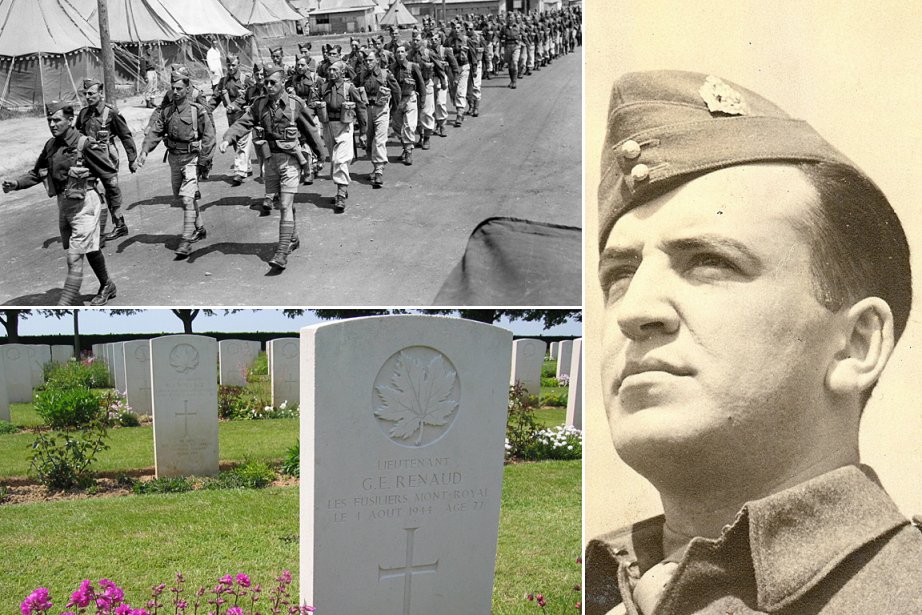
The actual funeral of Lieutenant Renaud

Guy Renaud, husband and father of two children, enrolled as a volunteer in the Canadian Army and was sent to combat in July of 1944. His widow later received the news that it was in a village in Normandy, while he was studying maps of the region, that he was hit by a sniper hidden in a church bell tower. He died instantly, after 10 hellish days of blood and fire. Before he left, this father of two had a head of black hair, and by the time he died all his hair had turned white.

This man, who gave his life for his country, was the great-grandfather of my two children. Two years ago, to honour his memory, we went on site with our son Christophe, in the footsteps of his great-grandfather.

In 2012, La Presse published an article with a picture. The family then recognized Guy Renaud leading his squadron. We have very few memories of him, and my in-laws went to great lengths to get that picture. The newspaper then published a new article entitled: “Le Noël du lieutenant Guy Renaud” (Lieutenant Guy Renaud’s Christmas).

While visiting Montreal, A Frenchman read the article and contacted a friend, who was an expert on the Normandy invasion. Considering the time of death of the lieutenant, and after some research into regiment movements, they established that he lost his life probably between St-André and May-sur-Orne. These were the first accurate details that we had received, 69 years after the death of the lieutenant. We had never known where it had actually happened.

We started our trip to Normandy with a visit to Juno Beach, hoping to better understand the scope of the invasion. As we were returning, our navigation system malfunctioned and led us astray. That is when I saw a road sign indicating the village of May-sur-Orne, and realized that without our knowledge, we had probably taken the same road that Lieutenant Renaud had, and that we may have been very near the area where he died. Another surprise: we were on the street called Fusilliers Mont-Royal, which was the name of his regiment. We had to take a picture. While posing in front of the street sign, a lady who was observing us asked us what we were doing there.

She then told us that her mother had seen the regiment enter the village. We became very emotional when we realized that she may very well have seen the Lieutenant’s “men”, only a few days after his death.

On Saturday, August 3rd, 2013, we visited the Bretteville-sur-Laize cemetery, where laid the remains of Guy Renaud. Almost 90% of French Canadian soldiers from the Second World War were single. As such, a young family visiting a grave in this cemetery is rare: our veterans may slowly be forgotten because they had no descendants. A man, intrigued by our little group, came to introduce himself, he was Mr. Le Baron, mayor of Cintheaux and president of the Juno Canada Normandy committee. He wanted to invite us to the official ceremony that was to be held the next day at the cemetery.

We were a bit reluctant (there is so much to see in Normandy!), so we returned to the grave one last time, and that is when we saw the date of his death: August 4th, and we were the 3rd. We then became overwhelmed with the desire for closure, so we returned the next day to the cemetery, on August the 4th, 2013, 69 years after the lieutenant’s death.

It was a magnificent ceremony, attended by a number of dignitaries and veterans. The Mayor addressed the audience and asked us to come forward. He then told the people how, the previous day, he had found us on our knees, putting flowers and family pictures on the grave of a Canadian war hero, underlining this great event that was the day of his death coinciding with the day of the ceremony.

All the Canadians sang our national anthem, O Canada, and many wreaths and flowers were handed out. Sixty-nine years after his death, a first formal tribute was given that day to Lieutenant Renaud, by this gathering, in front of his grandson and great-grandson, braking him free of the anonymity he was sharing with his brothers in arms.

The story does not end here however. In 2014, my in-laws made the same trip to celebrate the 70 years of the invasion. They met Mr. Le Baron who invited them in turn to the ceremony where they were given a posthumous medal.

The descendants of Lieutenant Renaud are deeply grateful to the French people for this generous tribute and mostly, to have given us the opportunity to finally be able to offer an actual funeral to our dearly departed.

We made our children promise to return one day to the grave of Lieutenant Renaud. They are part of the eternal life of this man, dead in 1944 at the age of 27, in a country that was foreign to him, and far from his beloved Mariette and his children Francine and Henry.

On this Remembrance Day, I wanted to share this story, hoping that somewhere, one of our veterans reads it, and realises that those who follow will not forget them, even 71 years later.

En l’honneur de nos combattants : les vraies funérailles du lieutenant Renaud

Guy Renaud, mari et père de deux enfants, s’enrôla volontairement dans l’armée canadienne et fut envoyé au combat en juillet 1944. On raconta plus tard à sa veuve que c’est au milieu d’un village normand, au moment où il étudiait les cartes de la région, qu’un tireur embusqué dans un clocher d’église le visa, le tuant sur le coup. Le père de famille avait les cheveux noirs en quittant le Canada, mais après 10 jours passés dans un enfer de feu et de sang, ils étaient devenus, le jour de sa mort, entièrement blancs.

Cet homme, ayant donné sa vie pour sa patrie, est l’arrière-grand-père de mes enfants. Voilà déjà maintenant deux ans que, par devoir de mémoire, nous avons suivi avec notre fils Christophe, les traces de son aïeul.

En 2012, La Presse publia un article où un membre de la famille reconnut sur une photo Guy Renaud marchant devant son escadron. Il nous reste très peu de souvenirs de lui, et mes beaux-parents remuèrent ciel et terre pour mettre la main sur ladite photo. Le journal s’empressa alors de publier un autre article s’intitulant : « Le Noël du lieutenant Guy Renaud ».

Un Français, en visite à Montréal, en prit connaissance et contacta un ami spécialiste du débarquement. Tenant compte de la date de la mort du lieutenant et après quelques recherches sur les mouvements des régiments, ils établirent qu’il perdit probablement la vie entre St-André et May-sur-Orne. C’était les premiers renseignements précis que nous recevions, 69 ans après la mort du lieutenant, ayant toujours ignoré où il avait rendu l’âme.

Le voyage en Normandie commença par une visite à Juno Beach ; nous désirions ainsi mieux comprendre l’ampleur du débarquement. Sur le chemin du retour, notre système de navigation fit des siennes, et nous étions perdus. J’aperçus alors un panneau routier annonçant le village de May-sur-Orne, et c’est sans le savoir que nous avions probablement emprunté la même route que le lieutenant Renaud et ainsi sans doute passé près des lieux de sa mort. Autre surprise : nous nous trouvions sur la rue des Fusiliers Mont-Royal, nom de son régiment. La photo s’imposait. Prenant la pose devant le panneau indicatif de la rue, une dame qui nous observait nous demanda la raison de notre présence.

Elle nous informa alors que sa mère avait été témoin de l’entrée au village du régiment. C’est les yeux pleins d’eau que nous avons alors réalisé qu’elle avait alors sans doute vu les « hommes » du lieutenant, seulement quelques jours après sa mort.

Le samedi 3 août 2013 fut le jour de notre visite au cimetière de Bretteville-sur-Laize, lieu du dernier repos de Guy Renaud. Près de 90 % des soldats canadiens-français de la Seconde Guerre mondiale étaient célibataires. Une jeune famille se recueillant sur une tombe de ce cimetière est maintenant devenue chose moins fréquente, nos combattants sombrant lentement dans l’oubli faute de descendance. Intrigué, un homme vint se présenter, et nous fîmes ainsi connaissance avec Monsieur Le Baron, maire de Cintheaux et président du comité de Juno Canada Normandie. Il s’empressa de nous inviter à une cérémonie officielle qui devait avoir lieu le lendemain au cimetière.

Un peu hésitants, puisqu’il y a beaucoup à visiter en Normandie, on retourna se recueillir une dernière fois sur la tombe, pour y remarquer la date inscrite de sa mort : le 4 août ; et nous étions le 3. Un puissant désir de fermer la boucle s’imposa à nous, et c’est ainsi que l’on se présenta pour une 2e fois au cimetière, soit le 4 août 2013, 69 ans jour pour jour après la mort du lieutenant.

La cérémonie fut magnifique avec tous ces dignitaires et ces vétérans. Monsieur le maire prit la parole ; il nous demanda de venir à l’avant et commença alors à raconter à la foule comment, le jour précédent, il nous avait trouvés là, agenouillés et déposant fleurs et photos de famille sur la tombe d’un héros canadien, soulignant la grande coïncidence du jour de la mort du lieutenant et de celui de la cérémonie.

Un « Ô Canada » fut entonné par tous les Canadiens présents et de nombreuses couronnes et fleurs furent déposées. Soixante-neuf ans après sa mort, un premier hommage officiel a été rendu ce jour-là au lieutenant Renaud par cette foule réunie, et ce, devant son petit-fils et son arrière-petit-fils, le sortant ainsi de l’anonymat partagé par tous ces frères d’armes.

Mais l’histoire ne s’arrête pas ici. C’est en 2014 que mes beaux-parents accomplirent le même voyage pour les 70 ans du débarquement. Ils entrèrent en contact avec Monsieur Le Baron qui les invita aussi à une cérémonie où leur fut remise une médaille à titre posthume.

Les descendants du lieutenant Renaud sont profondément reconnaissants envers ces Français pour cet hommage généreux et surtout, pour nous avoir donné le sentiment d’avoir enfin pu offrir des funérailles dignes de ce nom à l’un des nôtres.

Nous avons fait promettre à nos enfants de retourner un jour sur la tombe du lieutenant Renaud puisqu’ils sont la portion d’éternité de cet homme mort en 1944 à l’âge de 27 ans, dans un pays pour lui étranger et loin de sa douce Mariette et de ses enfants Francine et Henri.

Demain est le jour du Souvenir, c’est pourquoi j’ai voulu partager cette histoire souhaitant que quelque part, un combattant lise ces lignes, sachant que ceux qui suivent n’oublient pas, même 71 ans plus tard.

TO BE ORGANIZED… OR ELSE!

Many of us have followed one or more training sessions in time management. We all got some elements out of those courses which we have integrated in our daily activities. However, do we revisit those notions once in a while to improve our technique? Chances are that many of us do not have the time to do so. There are too many tasks that must be accomplished – whether professional or personal – and they all seem to bear the same degree of urgency. Consequently, in spite of our good intentions, life happens. Then, one day, we realize that once again, we are overwhelmed with the quantity of things to do, and don’t know where to begin. That is when we must sit down and get organized, otherwise others will “organize us”: our boss, our spouse, and even our children!

Problem is you can no longer find the binder or the notes you got from the course. No need to panic. Following is a short method to get back on track. You must, however, take a few minutes to work on it. The tools you need: a blank sheet of paper and a pen, or a Word document that you will save as “Tasks”.

  1. List all the tasks you have to accomplish during the week. Example: Make an appointment with the customer. Attend the weekly meeting. Study the sales report. Order supplies. Finalise the contract to be signed. Meet with an employee who asked for help. Meet with Finance Director to finalise a request for proposal. Make an appointment with the accountant for personal financial planning. Complete tax return. Reserve restaurant for outing with friends. Write them all. The longer the list of to do is, the more worthwhile the exercise becomes.
  2. Put letters A, B, or C next to each task:
    1. = Utmost importance, whether on a personal or on a professional level.
    2. = Important, but can wait, or may become of utmost importance one day.
    3. = Not that important, can become important one day, or be ignored.
  3. It is now time to make sure that each task has received the proper level of priority. Indeed, we all have a tendency to consider almost everything we have to do as being of utmost importance (an A). The reality is that 40% of our tasks are in the A category, 40% in the B, and 20% in the C.

Here’s what the situation looks like, when all the tasks listed in no. 1 have been properly identified:

Make an appointment with the customer. A

Attend the weekly meeting. B

Study the sales report. A

Order supplies. C

Finalise the contract to be signed. A

Meet with an employee who asked for help. B

Meet with Finance Director to finalise a request for proposal. A

Make an appointment with the accountant for personal financial planning. B

Complete tax return. B

Reserve restaurant for outing with friends. C

We can see that the activities listed as A are crucial to our profession, having an impact on revenues for our company and ourselves. B activities are the ones that can help us accomplish our personal financial goals. For example, our financial planning and our tax returns are important: they help give us direction. The C activities can be or can be delegated if there is simply no time to accomplish them, or even ignored.

If the list is very long, and in order to see it all in one snapshot, each task can be entered in columns identified as A, B, and C. And this exercise should be repeated as often as necessary, until it becomes second nature.

« Take time for all things: great haste makes great waste. »
Benjamin Franklin

If you have any comments, you can share them here, or on our blog at: https://consultationettraduction.com/

The authors can be reached at: consultation.virtus@outlook.com or mj.verhaaf@gmail.com

Anick Lamothe and Marie-Josee Verhaaf